Flat Belt
1. High-Performance Transmission Flat Belts
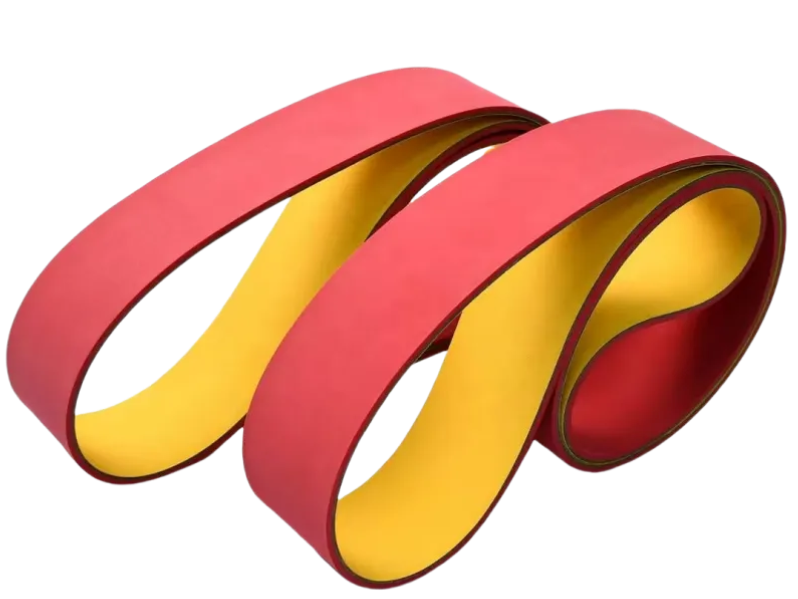
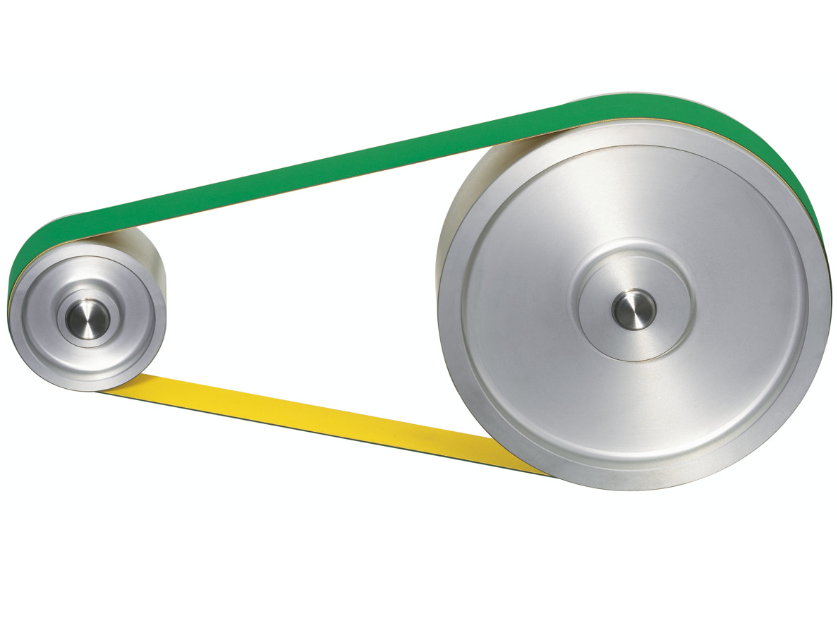
These belts are engineered with a strong traction layer, typically made of polyamide or aramid, sandwiched between friction covers (rubber or leather).
- Key Features: High elasticity with extremely low permanent stretch; capable of handling very high belt speeds.
- Applications: Main drives in textile mills, flour mills, and paper manufacturing.
- Benefit: Provides a high degree of efficiency (up to 98%) and maintains constant speed even under heavy fluctuations.
2. Leather Surface Flat Belts
A traditional yet highly effective design featuring a chrome-leather friction surface on one or both sides.
- Key Features: Exceptional grip and oil resistance; the leather surface "breathes," reducing heat buildup during high-slip starts.
- Applications: Heavy-duty drives with high shock loads, such as crushers or older industrial looms.
- Benefit: Offers a natural "clutch" effect, absorbing sudden torque spikes that could otherwise damage motors or shafts.
3. Folder-Gluer & Packaging Belts
Specialized flat belts used in the secondary packaging and printing industries.
- Key Features: Non-marking covers with specific friction coefficients to handle paper, cardboard, or plastic without damage.
- Applications: Folding, gluing, and feeding sections of packaging machines.
- Benefit: High dimensional stability ensures precise alignment of products during high-speed folding processes.
4. Anti-Static Flat Belts
Designed for environments where static electricity buildup poses a safety or operational risk.
- Key Features: Formulated with conductive materials to safely bleed off static charges.
- Applications: Electronics manufacturing, chemical processing, and flour mills (to prevent dust explosions).
- Benefit: Protects sensitive electronic components and ensures compliance with industrial safety standards.