Mechanical Seal
1. Single Spring Mechanical Seals
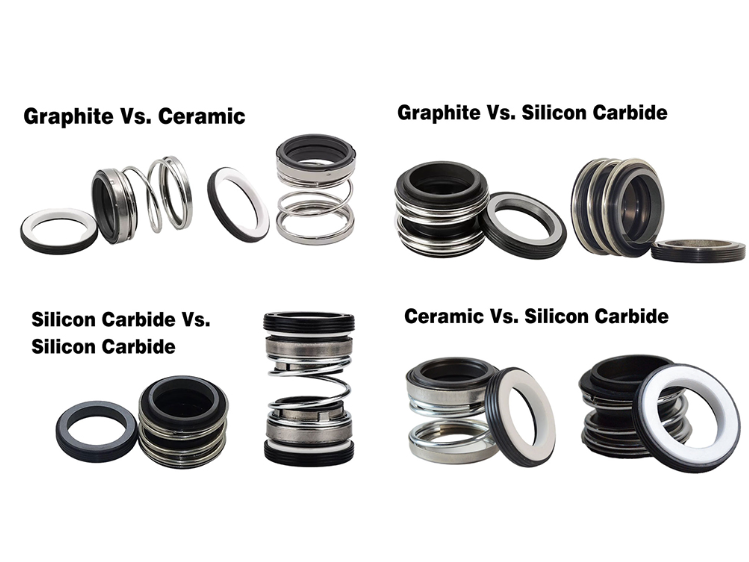
The most widely used seal for general industrial applications. It utilizes a single coil spring to maintain pressure on the seal faces.
- Key Features: Robust, simple design that is highly resistant to clogging.
- Applications: Centrifugal pumps, water supply systems, and wastewater treatment.
- Benefit: Its open-coil design allows it to handle fluids with slight impurities or debris without seizing.
2. Multi-Spring Mechanical Seals
These seals use multiple small springs distributed around the circumference of the seal to provide even face loading.
- Key Features: Compact axial design; provides more uniform pressure on the seal faces than single-spring versions.
- Applications: High-speed chemical pumps and precision machinery.
- Benefit: Better suited for high-speed rotations and applications requiring precise pressure distribution.
3. Bellows Mechanical Seals (Rubber & Metal)
Bellows seals eliminate the need for dynamic O-rings, using a flexible "bellows" structure to provide the secondary sealing and spring force.
- Key Features: Rubber Bellows are ideal for water and oil, while Metal Bellows are engineered for extreme temperatures and chemicals.
- Applications: Food processing (Rubber) and petrochemical refineries (Metal).
- Benefit: Since there are no sliding parts on the shaft, these seals prevent "shaft fretting" (wear) and are excellent for handling viscous or crystallizing fluids.
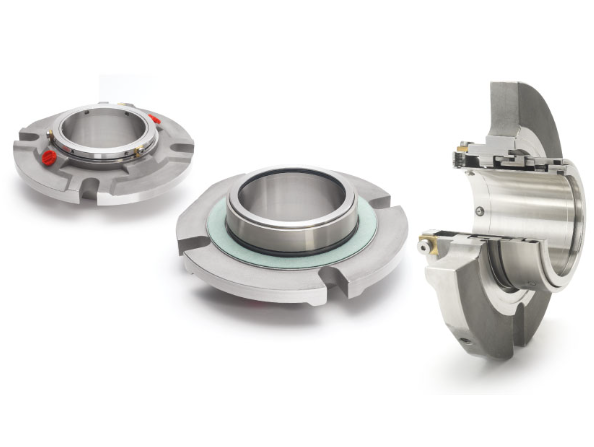
4. Cartridge Mechanical Seals
A pre-assembled unit containing the seal faces, gland, and sleeve. It is "ready to install" straight from the box.
- Key Features: No measurements or specialized tools required for installation; preset to the correct working length.
- Applications: Critical industrial pumps where downtime must be minimized.
- Benefit: Eliminates human error during installation, which is the most common cause of premature seal failure.